State heats and cools faster than h2o for many unlike reasons. Merely one of the main reasons is the departure in molecular composition between land and water. Because of the movements of the molecules, information technology takes much longer for h2o to heat up or cool down. Even so, this is the simple answer, and there are more contributing factors. Read on to learn why water takes much longer to estrus or cool, and also how this tin can affect atmospheric condition patterns.
H2o and Heat Conduction
Overall, water is a poor usher of heat. When speaking most molecular composition, in part, this is what is meant. It takes much longer for water to bear heat than it does state. Its molecules need to proceeds much
more than energy in order to oestrus up. H2o as well has a higher chapters for rut than state does. This is what is chosen "specific estrus." Because of this, the solar power given off past the sun takes a much longer time to take event — and h2o can get much hotter than regular landforms.
H ow Is Sand Warm and Bounding main Water Cold?
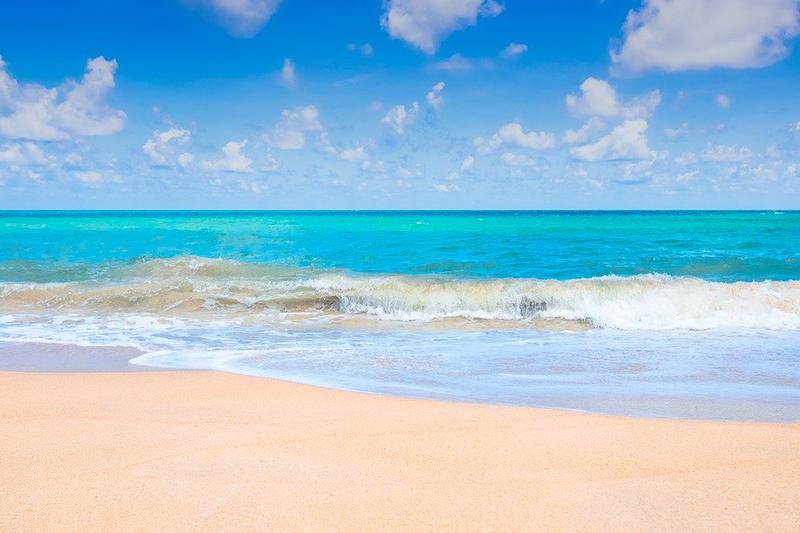
The embankment is a perfect example of how much more than speedily country heats upward than water. During the summer, sand tin become and so molten hot it's nearly unbearable to walk on information technology, but ocean temperatures can nevertheless be icy cold. Land is a quick conductor of rut and free energy, and therefore, country heats much faster. On the other hand, land loses its heat much faster. You tin can besides expect at the beach in the wintertime to see that there may exist snowfall and ice on the beach, merely of grade, the ocean is not frozen.
Thou ore on Heating and Cooling
Land temperatures can easily vary by dozens of degrees during the day. An typical day during the bound or fall may have a low of l degrees Fahrenheit in the morning and a high of 80 in the afternoon. These air temperatures are non dissimilar from heating and cooling of land. However, during the day, water forms may only change in degree by a half degree, except for perhaps during the dog days of summer. Because of h2o's specific rut, h2o temperatures practise not drop drastically at night only stay marginally the same, while state and air temperatures drop significantly during all seasons.
W hy Are Coastal Areas Cooler?
You may notice that in the summer, inland temperatures may be scorching hot, while coastal areas remain cooler. This is directly caused by the ocean. Because water heats and cools more slowly and oceans only change by pocket-sized amounts throughout the twenty-four hours or season, littoral areas remain libation. In fact, heating and cooling differences between country and h2o impact the climate everywhere on earth.
State and H2o Are Affected by Color
The heating differences between land and h2o are affected past
other reasons beyond h2o's molecular composition and specific heat. Colour likewise matters. Darker materials accept a tendency to absorb more radiation (sun free energy), and this, in turn, can make state masses hotter. Every bit water is lighter in color than land as information technology is clear, information technology absorbs much less of the sun'south rays.
50 and and Water Are As well Afflicted by Texture
Texture also has a lot to do with the differences in heating and cooling of land and water. Rough, dry materials absorb more heat. When we talk about land, it'due south not but the landforms themselves. Cities make up quite a big office of the globe, and they are often mainly equanimous of asphalt and concrete, which both absorb more radiation. You can test this out by walking on a hot sidewalk and then walking in the grass beside it.

